
Do you require help or further information?
Contact us! We are happy to advise you:
fzexalabs.com
+91 9810506498
- Target groups
- Test types
- INCI database
- Organic & Vegan Cosmetics
- Microplastics in cosmetic products
- Label checks of cosmetic products
Who are the target groups of our cosmetic analyses?
Legal regulations for cosmetics
- Regulation (EC) 1223/2009 on cosmetic products basically regulates which obligations apply to cosmetics.
- This is supplemented by the “Technical document on cosmetic claims” in which common criteria for the use of advertising claims are defined.
- Recommendations and regulations are also published in official publications.
- A so-called preservation load test, which is evidence of microbiological stability and is carried out as standard according to DIN EN ISO 11930.
- Regulation (EU) No. 655/2013, the Claims Regulation, regulates under which conditions advertising claims on cosmetic products can be used.
- Associations and institutions such as BfR, BVL and IKW evaluate cosmetic products and their ingredients and make recommendations.
- Furthermore, there are country-specific ordinances, such as the German Cosmetics Ordinance, which regulates, for example, the duty of notification for German cosmetics companies.
- The chemical-physical stability test, because a cosmetic product must be stable over its entire life cycle.
Test types for cosmetic testing
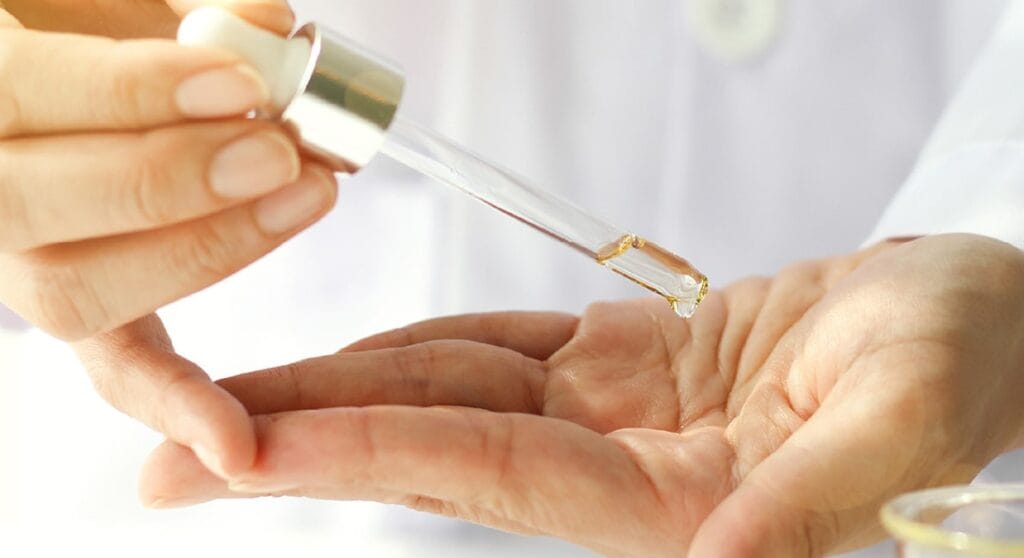
Microbiological Cosmetic Testing
The ISO 17516 regulation defines general requirements and limit values for the microbiological quality of cosmetic products. In detail, this includes the following analyses:
- quantitative testing of the aerobic mesophilic total plate count
- quantitative testing of yeasts and moulds
- qualitative analysis (absence) of specified microorganisms in 1g of product : Pseudomonas aeruginosa, aureus, Escherichia coli, Candida albicans
- qualitative analysis (absence) of non-specified microorganisms in 1g of product
- identification of microorganisms in growth absence of Pluralibacter gergoviae in 1g product
Preservation load tests are carried out as part of the development and controls of products. The results are required once for the safety assessment required by the EU Cosmetics Regulation or when products are reformulated. In a preservation stress test, also called challenge test, the product is inoculated with the microorganisms and stored under defined conditions (time, temperature, etc.). After the defined time, the microbial count and the microbial count development are determined in order to be able to make statements about microbial stability.
The microbiological parameters listed above (except for the preservative load test) should also be tested during the quality control of raw materials, because the quality of cosmetics is largely dependent on the quality of the raw materials used.
Microbiological analyses must also be carried out as part of hygiene and monitoring in the factories. Here, for example, the production water is analyzed and smear and swab samples are taken.
Chemical cosmetic testing
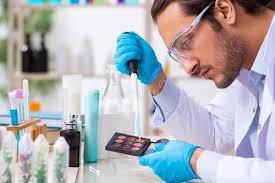
- Declarable or prohibited fragrances
- Preservatives
- Phthalates (plasticizers)
- PAHs
- Heavy metals
- NDELA or nitrosamines in general
- Mineral oils (MOSH/MOAH)
- Formaldehyde and formaldehyde releasers
- Pesticides (especially when using plant-based raw materials or natural cosmetics)
- Active ingredients: e.g. panthenol, vitamin E and vitamin E acetate (=tocopherol and tocopherol acetate), glycerin
- Physical parameters such as pH value, density, viscosity, water activity (aw value) etc.
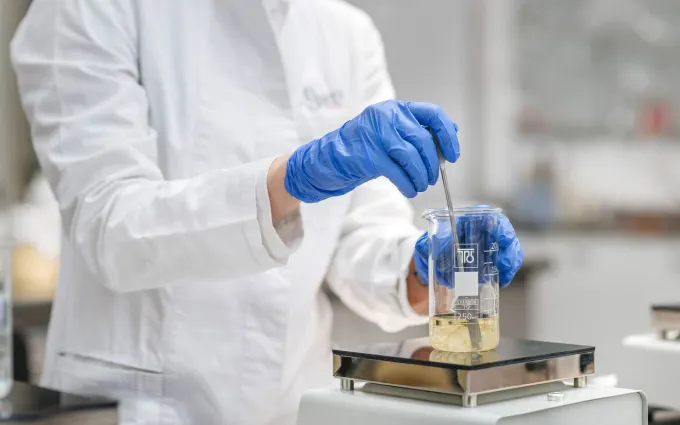
Sensory testing of cosmetic products
Residue analysis of harmful substances in
cosmetics
What is the INCI database and how is it included in the analyses?
The CosIng database is an interpretation aid and translates the glossary with the INCI data. This simplifies the search for cosmetic ingredients and also provides further information on their use.
What is Organic & Vegan Cosmetics?
With ISO 16218, there has been an international standard for natural cosmetics for a few years, in which, for example, cosmetic ingredients are divided into categories. However, this ISO regulation is viewed critically, as the requirements are not very high and in some cases fall short of the requirements of various associations.
Microplastics in cosmetic products
For this reason, many companies have voluntarily signed a disclaimer on the use of microplastics in their products.
Label checks of cosmetic products
Overview of laboratories for cosmetic testing of the Tentamus Group